Can a drain under a concrete slab be cleared without breaking the floor?
Usually, yes. Clearing a blockage and repairing a broken pipe are two different jobs, and only the second one needs the floor opened.
In a slab-on-grade house the drain lines run inside or beneath the concrete. There is no crawlspace to inspect, so symptoms are the only evidence you have. A cable or a hydro jetter still reaches the line through a cleanout or through a pulled toilet. Grease build-up on the pipe wall, roots in a joint and scale in cast iron can all be cleared that way.
What does need the floor opened is a cracked, collapsed or bellied section under the slab. A bellied line holds water and collects waste however often it is cleared. In older housing stock where clay or cast iron was the standard, failed sections are more likely.
A camera inspection with a locator pinpoints the fault. The plumber finds the exact spot and marks it on the floor before anything is cut, which keeps the opening small. What the job involves is driven by access, the materials, how much concrete must be opened and removed, and any permit or code requirement. Opening a slab often brings one in.
Safe homeowner check: note whether one fixture is slow or every drain is affected. A single slow fixture is usually a cable job on a branch line. Every drain backing up points to the main line or the sewer lateral.
Stop running water and call now if the whole house is backing up. Report water staining or a warm, damp patch on the floor, because it can mean a leak under the slab.
Expert Plumbers Co is a referral service. We refer homeowners in Georges Mills, NH to an independent local plumber. Call (380) 262-9173.
A spot repair under a slab is more disruption than most people picture. The plumber breaks out a section of concrete, digs down to the pipe, replaces the damaged length, and the floor is patched. Dust, noise and a few days without some fixtures are normal. Furniture and flooring over the area must be moved first, and tile or a finished floor may not match after patching.
For longer runs of damage, some plumbers can line the pipe from inside, or route a new line overhead or outside the house, which avoids cutting the slab. Whether either suits your pipe depends on its condition and on local code.
Ask to see the camera footage and the locator mark on the floor before any cutting begins. Mention in-floor heating, radiant tubing or a post-tension slab if you have one. Cutting into those without knowing is dangerous, so the plumber needs to hear about them before a saw comes out.
My bathroom sink drains slowly but the stopper is clean. What else could it be?
If you have pulled the stopper and cleaned off the hair and soap film and the sink still drains slowly, the restriction is further down. The stopper mechanism is only the first few inches. Most of the slowdown lives in the pivot rod area, the tailpiece, the trap, or the pipe beyond it.
The common cause is a layer of soap scum, toothpaste and hair that binds together on the pipe wall. It narrows the pipe a little each month, and the sink slows long before it stops.
Safe checks you can do: set a bucket under the sink and unscrew the trap. Clear out what you find and rinse it. Look at the short pipe going into the wall for build-up you can reach with a bottle brush. Fill the basin and let it run, then watch whether the water drains evenly or with a gurgle. Skip chemical cleaners, which can soften plastic fittings and leave caustic liquid sitting in the trap.
Gurgling is a clue. A sink that drains slowly and gurgles can point to a blocked vent, because the drain cannot pull air behind the water. If the toilet or shower near that sink also acts up, the blockage may be in the shared branch line or the main drain, not the sink itself.
One slow sink with everything else normal usually means a local clog, and a cable machine through the trap arm is enough. If the pipe clears and slows again within a few weeks, a camera inspection can show whether the pipe wall is scaled over or has a sag that holds water. Heavy scale or soap buildup in the branch line may call for hydro jetting.
Call and stop using the sink if you see water leaking from the trap or the wall, if sewage smells from the drain, or if several drains in the house slow at once. That pattern usually means the main line is partly blocked.
Cost depends on how easy the pipe is to reach, whether the cleanout is nearby, how far the plumber must run the cable, and whether any worn pipe has to be replaced.
Expert Plumbers Co can connect you with an independent local plumber in Georges Mills, NH when you call (380) 262-9173.
Water comes up in my bathtub when the shower or the sink next to it is running. What does that mean?
When water appears in the tub while another fixture runs, the drain water has nowhere to go and is finding the lowest open drain in the bathroom, which is usually the tub. It means the shared drain line past those fixtures is restricted. It is not a tub problem.
The tub drain sits low and connects to the same branch as the sink and often the toilet. If a clog, a bellied pipe holding water, or roots at a joint slows that branch, the extra flow from the sink backs up through the tub drain. A tub that gurgles or burps is showing you the same thing.
The timing tells you something. If it happens only when the sink runs, the blockage may be in that shared branch. If it also happens when the washing machine or a toilet elsewhere in the house is used, the main drain is the likelier suspect, and the whole line is slowing down.
Safe checks you can do: run the sink alone and watch the tub, then run the shower alone and watch the sink. Check whether a basement floor drain or other low drain shows water too. Pull the tub stopper or strainer and clear any hair. Do not keep running water to see how bad it gets, and do not use chemical cleaner in a drain that is already backing up, since the liquid can come back up to your skin.
A cable machine often clears a soft clog in a branch line. If the backup returns, it needs a camera inspection to show whether roots, a bellied section, or a damaged joint is behind it, and hydro jetting may be the next step for grease or heavy buildup on the pipe wall.
Stop running water and call right away if the water in the tub is dark or smells like sewage, if it rises when you flush, or if other drains in the house are slow. That points to the main sewer line, and wastewater is a health risk. Keep children and pets out of the bathroom.
Cost depends on access, how far the blockage sits, whether a cleanout is available, and how much has to be opened or replaced.
Expert Plumbers Co can connect you with an independent local plumber in Georges Mills, NH when you call (380) 262-9173.
Can a drain cable or hydro jetting damage old pipes like cast iron, clay or thin-wall pipe?
Yes, it can, and a good plumber knows that before the machine is switched on. Old pipe is not equally fragile everywhere, and the choice of tool depends on what the pipe is made of and what shape it is in.
Cable machines spin a cutting head against the pipe wall. In sound pipe that is fine. In clay with offset joints, the head can catch on a lip and snag. In cast iron with heavy scale, a cutting head can knock loose flakes, and in a pipe already thinned by corrosion it can punch through. Thin-wall plastic or older Orangeburg-type fiber pipe can be gouged or deformed.
Hydro jetting pushes water at high pressure through a nozzle. On solid pipe it cleans the walls better than a cable. On a cracked clay pipe, a corroded cast iron stack, or a joint that has already shifted, that pressure can widen the damage or send water out into the soil.
So how does the plumber decide? Usually from several clues:
The age and material of the house and the pipe, which tells the plumber what to expect.
Past history, such as repeated roots, earlier repairs, or a line that has never been inspected.
How the cable behaves. A head that bounces, stops at the same distance, or comes back with pipe chips or rust flakes suggests the pipe itself is damaged.
A camera look first. This is the most direct answer. If the line is fragile or offset, the plumber can choose a gentler head, lower pressure, or no jetting at all.
If you suspect old pipe, say so on the phone. Tell the plumber the age of the house and the pipe material if you know it. Ask whether the tool will be matched to the pipe, and whether a camera look comes first.
Sometimes the honest answer is that a quick clearing is worth the risk to get water moving, with a plan to inspect afterward. Sometimes it is not. Either way, the decision should be explained to you before the work starts, not after.
If you need a drain cleared in Georges Mills, NH, Expert Plumbers Co can connect you with an independent local plumber at (380) 262-9173.
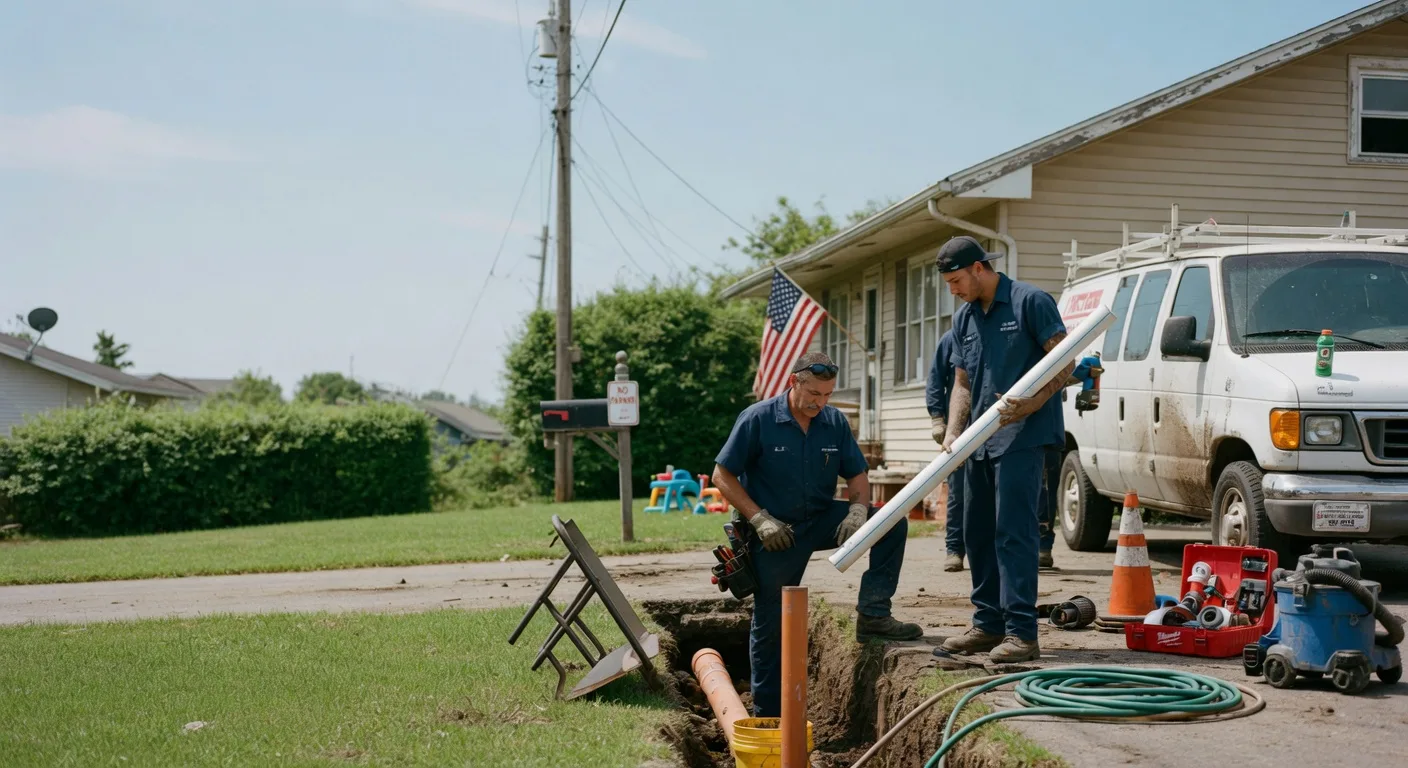
The city is replacing the street main outside our house. Why are our drains acting up now?
The crew has been digging up the street for a week, and now your toilets gurgle, the tub drains slowly, or you saw muddy water in a floor drain. It is natural to suspect the work outside. There are a few real reasons why it can be connected.
Your house drain, called the lateral, runs from your foundation to a connection on the city main. When the main is dug up and replaced, that connection is cut and reattached. Vibration, trench work and heavy equipment can crack an older clay or cast iron lateral, push a joint out of line, or shift the pipe so water now pools in a low spot. Dirt, gravel and construction debris can also wash into the line while connections are open. The work can also cause temporary backups while flow is being rerouted or the new pipe is flushed.
The key question is whether it is one fixture or the whole house. A single slow sink is probably the fixture. If every drain is sluggish, gurgling or backing up at once, particularly the lowest ones, the trouble is in the lateral or the main, and the street work is a likely suspect.
Safe homeowner check: write down when the symptoms began and compare that to when work started near your address. Take photos of any muddy water, debris or wet floor. Check whether neighbors have the same trouble. Run one tap for a minute and see if the lowest drain in the house reacts.
Stop running water and call now if sewage is coming up in a tub or floor drain, if there is standing water in the basement, or if you smell sewage inside the house. Do not keep using the washer or dishwasher.
Tell the utility or the contractor promptly. They may have a claims process, and a delay can make it harder to show when the damage started. A cable machine may be enough if loose debris is the problem. If the lateral is cracked, offset or holding water, the plumber will need a camera inspection to see the damage, and hydro jetting can flush out silt and gravel.
Expert Plumbers Co is a referral service. We connect you with an independent local plumber in Georges Mills, NH. Call (380) 262-9173.
Ask the plumber to record the camera inspection and write down the footage location of any damage, so you can give it to the city or contractor. Scope depends on how deep the pipe is, how much has to be dug up or opened, parts and materials, and any permit or code requirement. Responsibility for the repair varies by area, so confirm who owns which section of the line.